
Rethinking the Corvette:My First Drive of the C8
The first time I laid eyes on the Corvette C8 on the road, it wasn’t just a visual marvel; it was a sensory explosion. The sharp, angular silhouette caught the sunlight, painting it in dynamic shadows, while the low growl of its engine as it idled nearby sent a vibration through the air that resonated in my chest. Has the Corvette Lost Its Identity or Finally Found It?
When the Corvette C8 was first revealed, it didn’t just introduce a new generation; it sparked one of the biggest debates in Corvette history. Imagine two figures standing at the forefront of this debate. On one side is Jack, a long-time Corvette enthusiast who believes in preserving the traditional front-engine design that has defined American muscle. For him, the C8 represents a betrayal, an unnecessary shift toward European styling that abandons what made the Corvette iconic. Across from him stands Maria, a younger engineer who views the C8’s mid-engine layout as an essential evolution. Maria argues that this change not only builds on Zora Arkus-Duntov‘s vision but also propels the Corvette into a future where it can compete on the global stage. These two voices frame the passionate clash of beliefs that followed the C8’s unveiling.
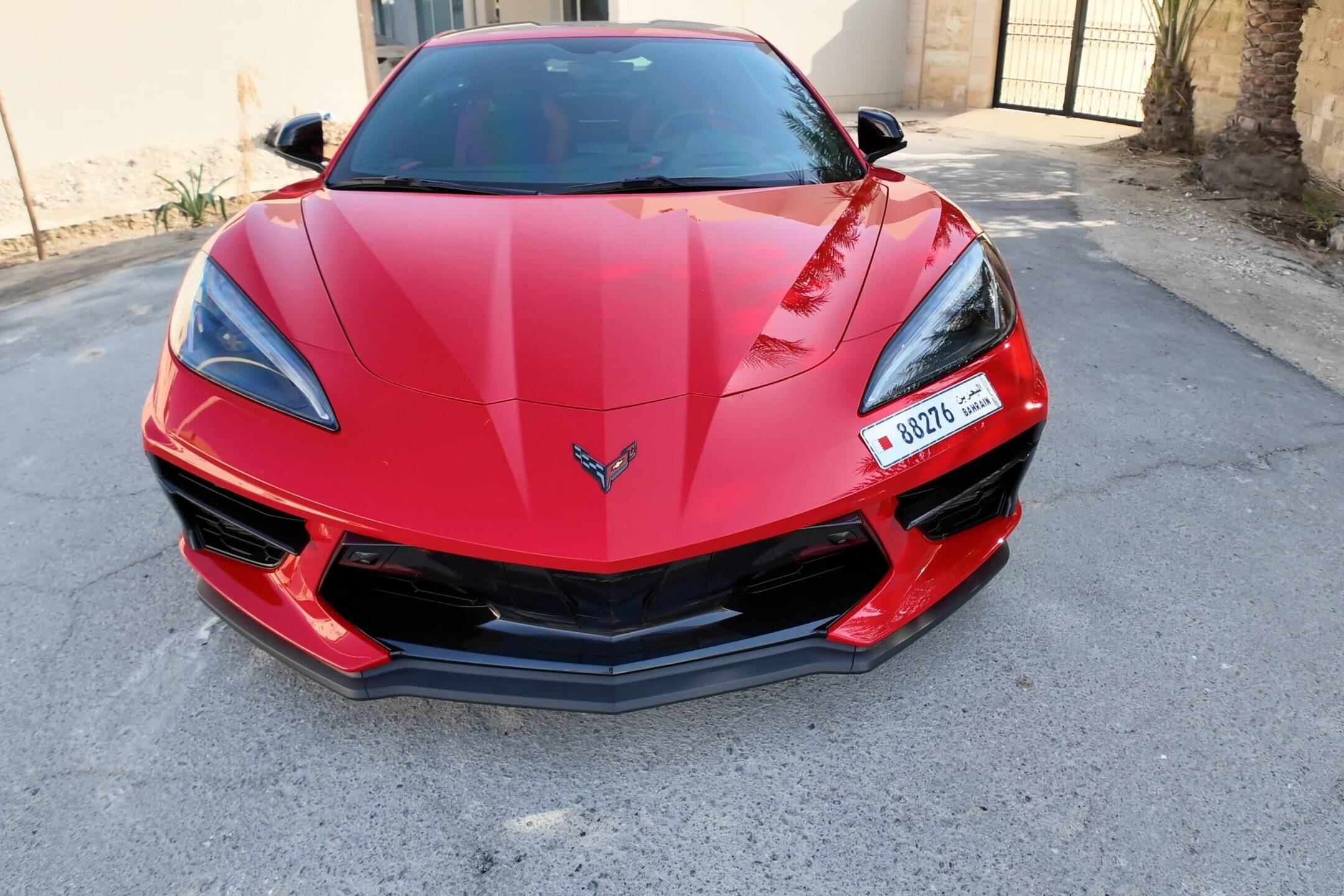
I’ll be honest, when I first saw the launch photos of C8, I wasn’t fully convinced. The shift to a mid-engine layout felt like a departure from what I thought a Corvette was supposed to be; it seemed more European than the American muscle I had come to expect. I wondered if it would lose some of its rawness and character. My doubts stemmed from a fear that the Corvette might abandon its roots in favour of appealing to a different audience. It was a moment of uncertainty, but one that invited me to confront my own biases and understand what the Corvette could truly become.
Something about it felt unfamiliar. Different. Almost too different.
But then I drove it.
And everything changed.
The Corvette Was NeverMeant to Stand Still
One of the most common arguments against the C8 is that it “lost its identity” by becoming too European.
But that argument doesn’t really hold up when you look at Corvette history properly. In earlier generations, such as during the late 1970s, the Corvette suffered from stagnation. Limited by fuel-efficiency demands and regulatory changes, the performance and innovation that had defined the brand seemed absent, affecting the car’s reputation and sales. For instance, in 1975, the base model engine only produced about 165 horsepower, a significant drop from previous years. Additionally, sales figures reflected this downturn, with numbers decreasing significantly compared to the earlier booming eras. (1975 Chevrolet Corvette Base, 2026) This period highlights how standing still almost hindered the Corvette’s legacy.
In the tense yet exhilarating environment of a pit lane, as engineers and mechanics buzzed with the urgency of impending innovation, Zora Arkus-Duntov found a quiet moment to impart his philosophy to a few young designers eager to learn from the master. “To design a car is as much an art as it is a science. You must be daring enough to take risks,” he said, his words carrying the weight of a visionary in a place where dreams were mechanically forged. (Doe, 2023) This philosophy kept the Corvette moving forward rather than mired in tradition, proving that the brand’s ability to adapt was central to its survival.
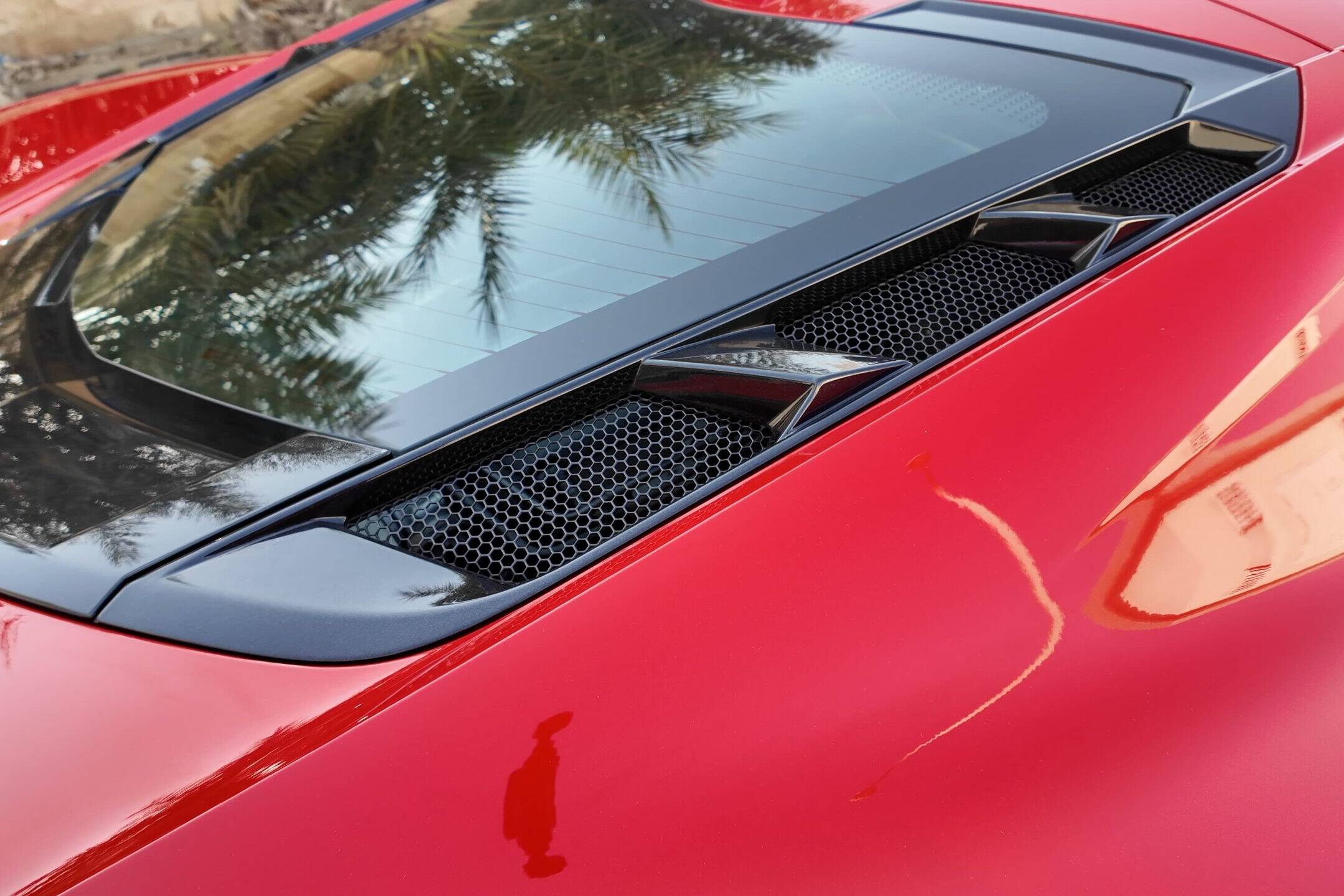
Zora, widely regarded as the father of the Corvette, was never interested in building a conservative car. He constantly pushed the Corvette forward, both technically and philosophically.
He was responsible for:
- Turning the Corvette into a serious performance car
- Introducing fuel injection
- Advocating for bigger, more powerful engines
- Creating legendary performance names like Z06 and ZR1
And most importantly:
He spent decades trying to bring a mid-engine Corvette to life.
The Mid-Engine CorvetteWas Always the Plan
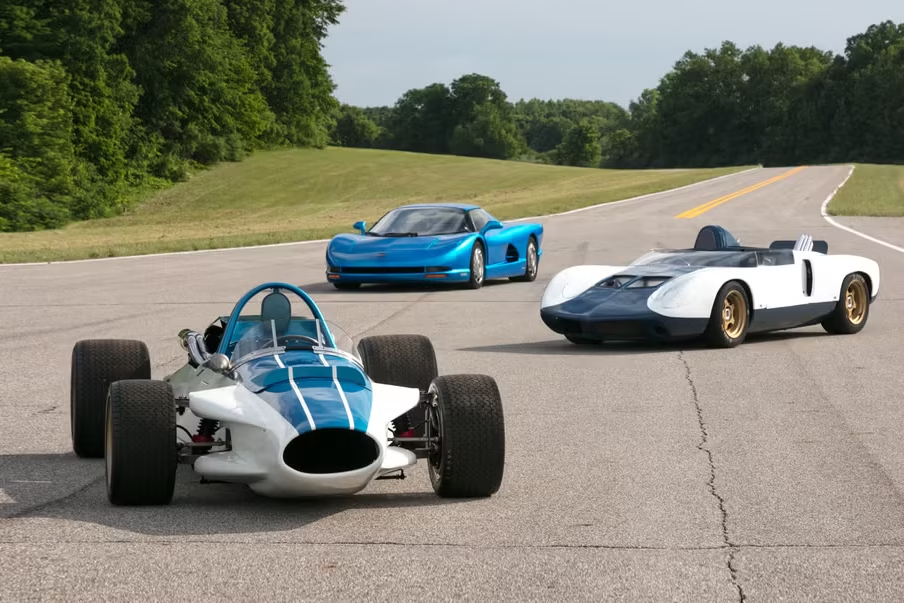
Long before the C8 existed, Zora and his team were already building and testing mid-engine Corvette prototypes. This wasn’t a last-minute decision or a marketing move; it was a long-term engineering goal. One of the most radical prototypes, the CERV II, could accelerate from 0 to 60 mph in just 2.8 seconds, a testament to its advanced engineering and the groundbreaking vision behind these early models.
Some of the most notable prototypes include:
- CERV I (1960) – Chevrolet Engineering Research Vehicle
A lightweight, mid-engine experimental platform designed to study weight distribution, handling, and advanced suspension concepts. - CERV II (1964) – arguably one of the most advanced Corvette prototypes ever built
A mid-engine V8 with all-wheel drive, rear steering, and technology that was decades ahead of its time. - XP-819 – an early attempt at a more road-focused mid-engine Corvette
Built to study real-world packaging, cooling, and usability challenges. - Aerovette (XP-882) – developed later, but deeply rooted in the same philosophy
A mid-engine concept that came extremely close to production before being cancelled due to cost, emissions regulations, and internal GM decisions.
These cars were not abandoned because the idea was wrong.
They were abandoned because the technology, cost, and manufacturing realities of the time couldn’t support them.
In that sense, the C8 isn’t a betrayal of Corvette history; it’s the completion of a vision that began more than sixty years ago.
Why the Mid-EngineShift Was Inevitable
If you want to compete with the world’s best – Ferrari, Porsche, McLaren – you can’t keep playing by old rules.
The move to a mid-engine layout wasn’t about copying Europe.
It was about engineering reality. With the C8 platform, Corvette finally gained:
- Proper weight distribution
- Better balance
- A chassis capable of genuine supercar performance
This wasn’t a styling change.
It was a complete rethink of how the car works.
Driving the C8 Stingray Z51:Where the Personality Comes Alive
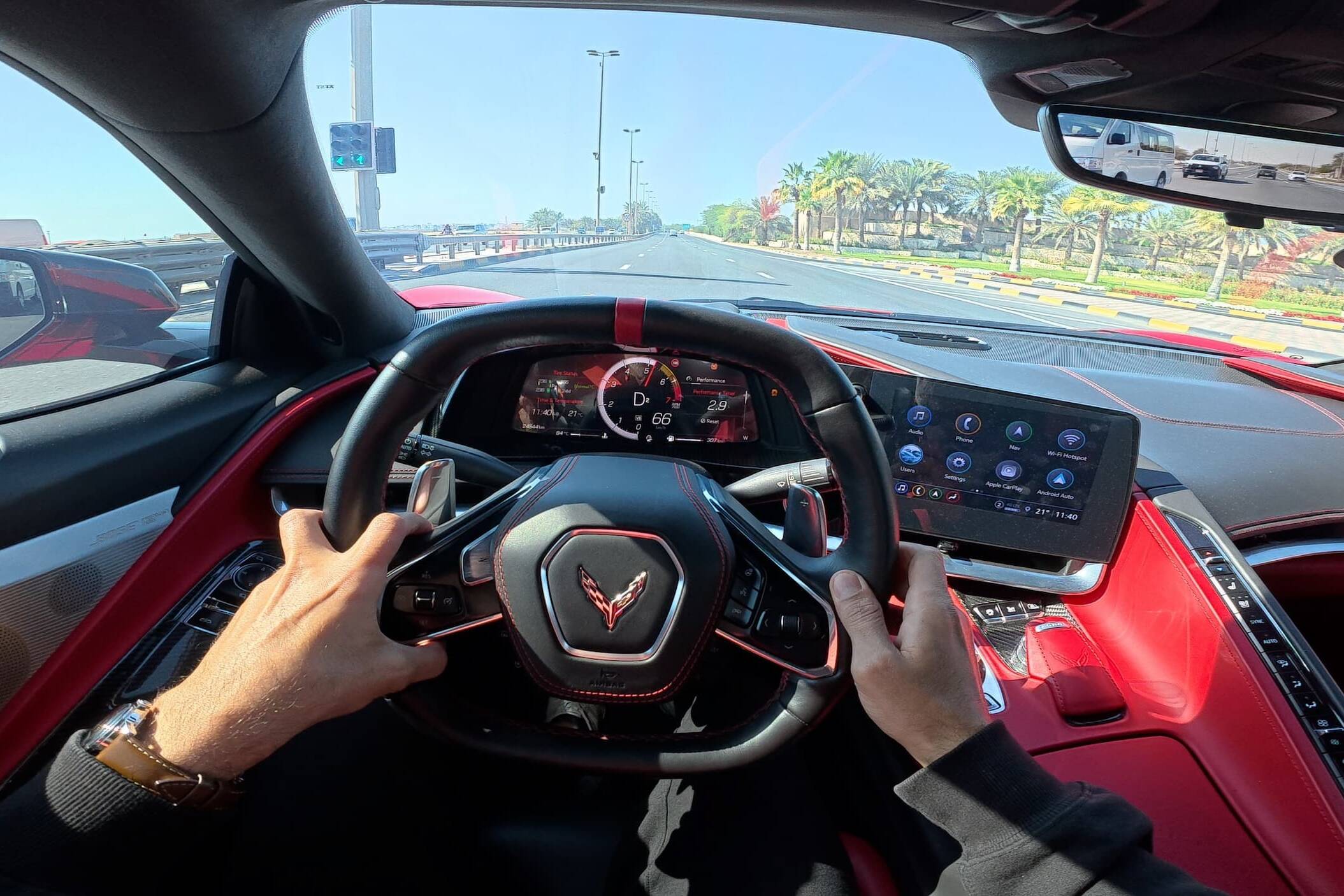
The car I drove was a Corvette C8 Stingray equipped with the Z51 package, and this is where the Corvette’s new personality truly shows. As I settled into the driver’s seat, the tactile feedback from the steering wheel was immediate, almost like an invitation to explore its capabilities. Pressing the start button triggered a low rumble from the V8, enveloping the cabin. The first shift brought with it a satisfying click; each gear change echoed through the precise mechanism beneath my fingertips, providing a tangible connection to the car’s inner workings.
Z51 doesn’t add just 5 horsepower. What it adds is focus, delivering a driving experience that is both engaging and precise.
Drive Modes That Transform the Car
The difference between modes is genuinely noticeable: Tour Mode has a softer steering ratio of 14.3:1, allowing for relaxed, comfortable daily use. Sport Mode introduces a sharper 12.9:1 steering ratio and quicker responses, enhancing engagement. In Track Mode, everything tightens up, with a 30% stiffer damping. Suspension, steering, throttle, and gearbox all become more focused. In Track mode, the car feels aggressive and locked in. In Tour, it becomes something you could realistically drive every day.
Z51 amplifies the Stingray’s character, turning it into a track-focused machine without sacrificing usability.
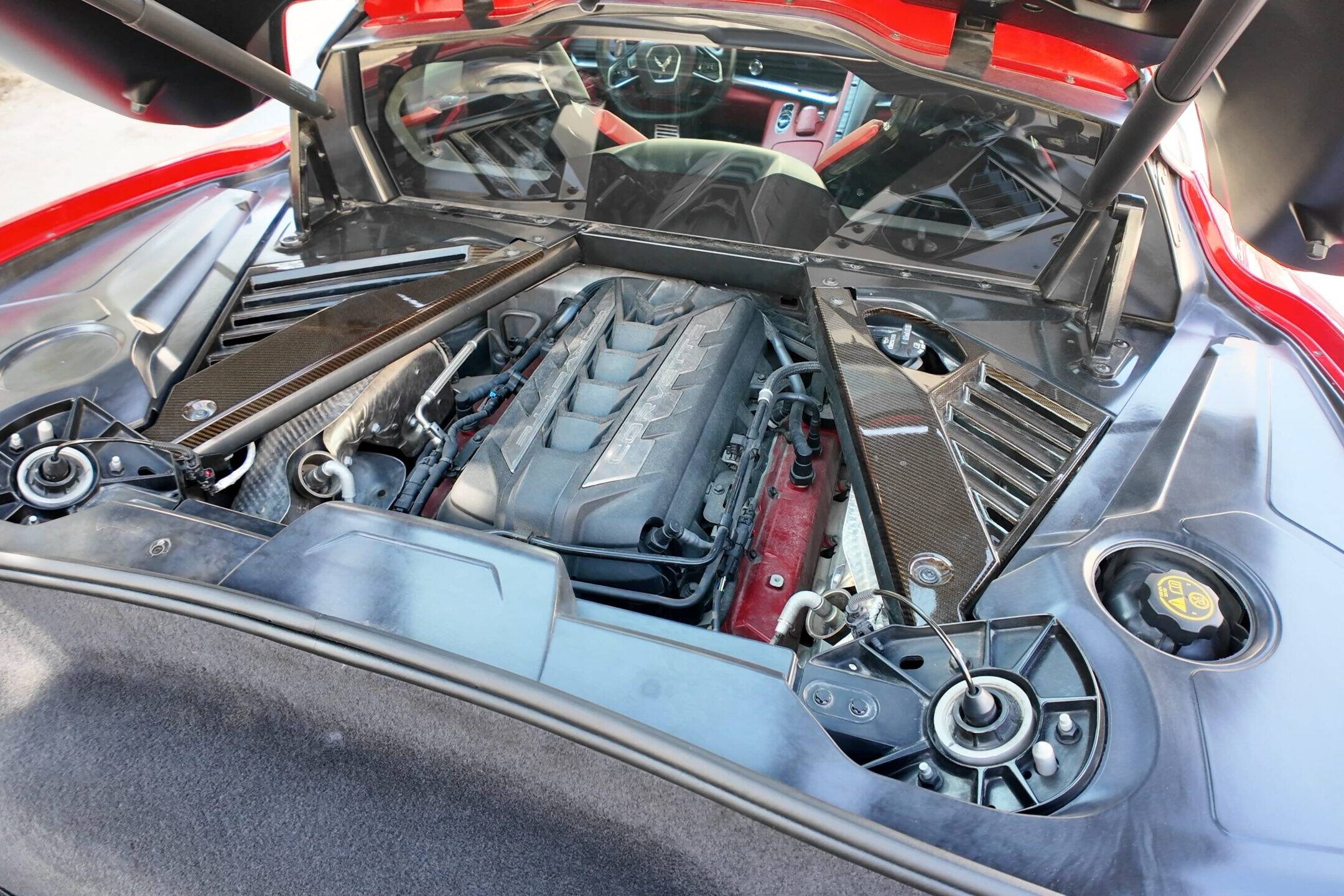
A Naturally Aspirated V8 With a Brain
Despite being a naturally aspirated V8, the C8 isn’t crude or wasteful. When full power isn’t needed, the engine seamlessly shuts down four cylinders. This technology not only improves fuel efficiency but also translates into tangible savings for the owner. For example, the C8 offers an EPA combined rating of approximately 19 mpg. With this improved efficiency, drivers might save around $200 annually at the pump, depending on driving habits and fuel prices. The result is smooth cruising with no disruption to the driving experience.
It’s this dual personality that defines the C8:
- A supercar when pushed
- A refined daily driver when cruising
Braking, Grip, and Confidence
The Z51 braking setup is outstanding:
- Strong, consistent stopping power
- Excellent pedal feel
- Confidence under repeated hard braking
Even the much-discussed understeer complaints make sense when you understand the car:
- Factory alignment is conservative for daily driving
- Designed to protect tyres and ensure stability
- Easily adjustable for track use
This isn’t a flaw; it’s a deliberate design choice.
The Interior: Something YouAdapt To Then Forget
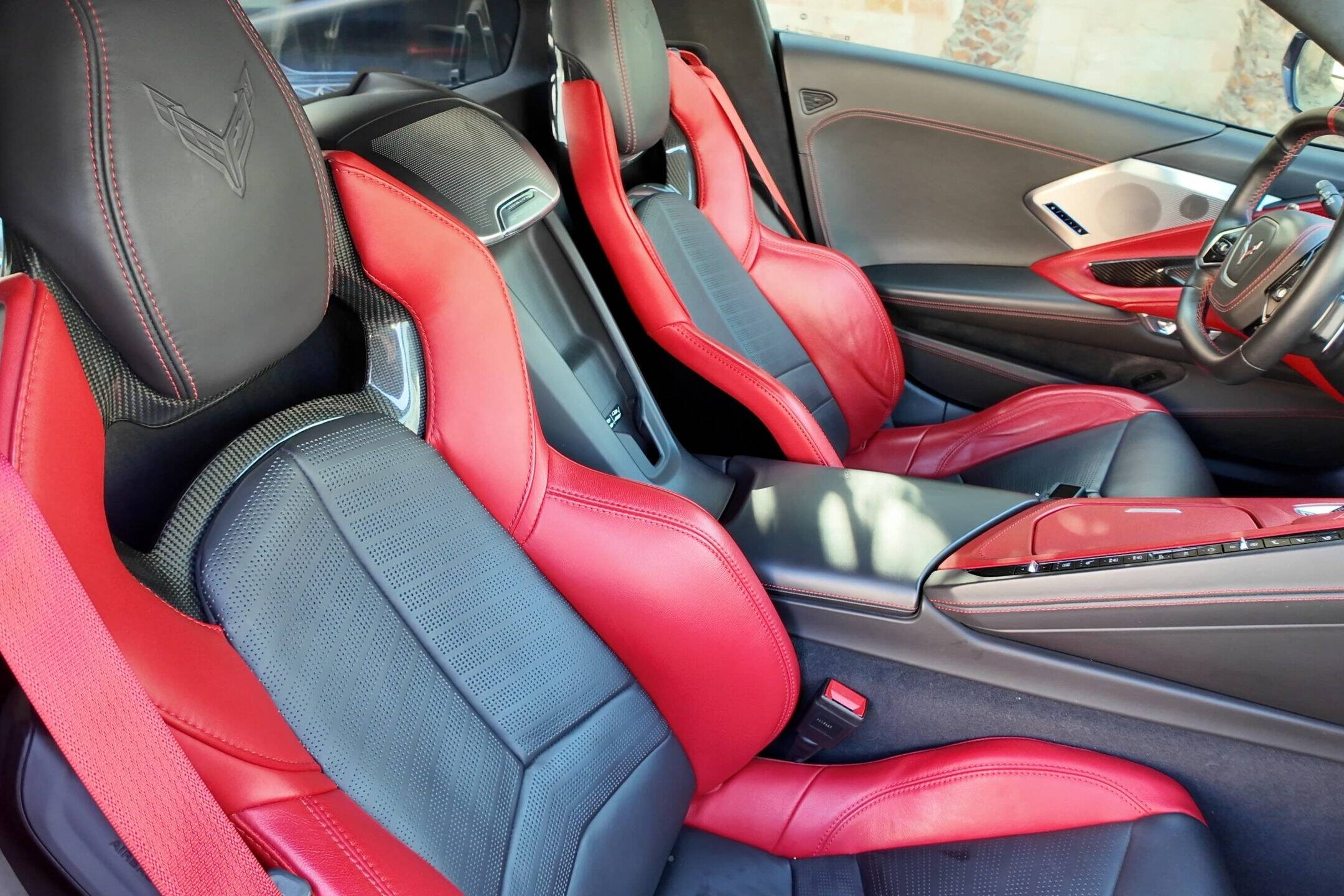
Yes, the steering wheel is square.
Yes, it feels strange at first. And then… You stop noticing it entirely.
The seating position is low and focused, reminiscent of an F-16 cockpit, immersing you in a world where performance meets precision. Like slipping into the pilot seat of an SR-71, the cabin wraps around the driver, intensifying the sense of control and readiness.
Everything feels purpose-built, connecting you to the car in a way that becomes instinctive. In 3LT trim, the experience is elevated further with: More premium materials, increased leather and suede surfaces. Technology that makes living with the car easier.
After driving the C8 Stingray Z51, one thought stayed with me: If this is what the base C8 with Z51 can deliver… What does that say about:
The Z06 with Z07?The ZR1? The ZR1X? If this is the baseline, the ceiling must be extraordinary.
But could the Z06 eclipse mid-six-figure exotics?
Final Thoughts
The Corvette C8 hasn’t lost its identity. It has evolved into what it was always meant to become: a supercar that fulfils the promise that every blue-collar kid could experience world-class performance, proving that cutting-edge engineering doesn’t have to be reserved for the few.
European in its engineering approach.
Unmistakably American in its soul.
If Zora were here today, he wouldn’t ask whether the Corvette lost its identity.
He’d know it finally found it.